Crash Baggage: how a startup can become a symbol starting from its own product.
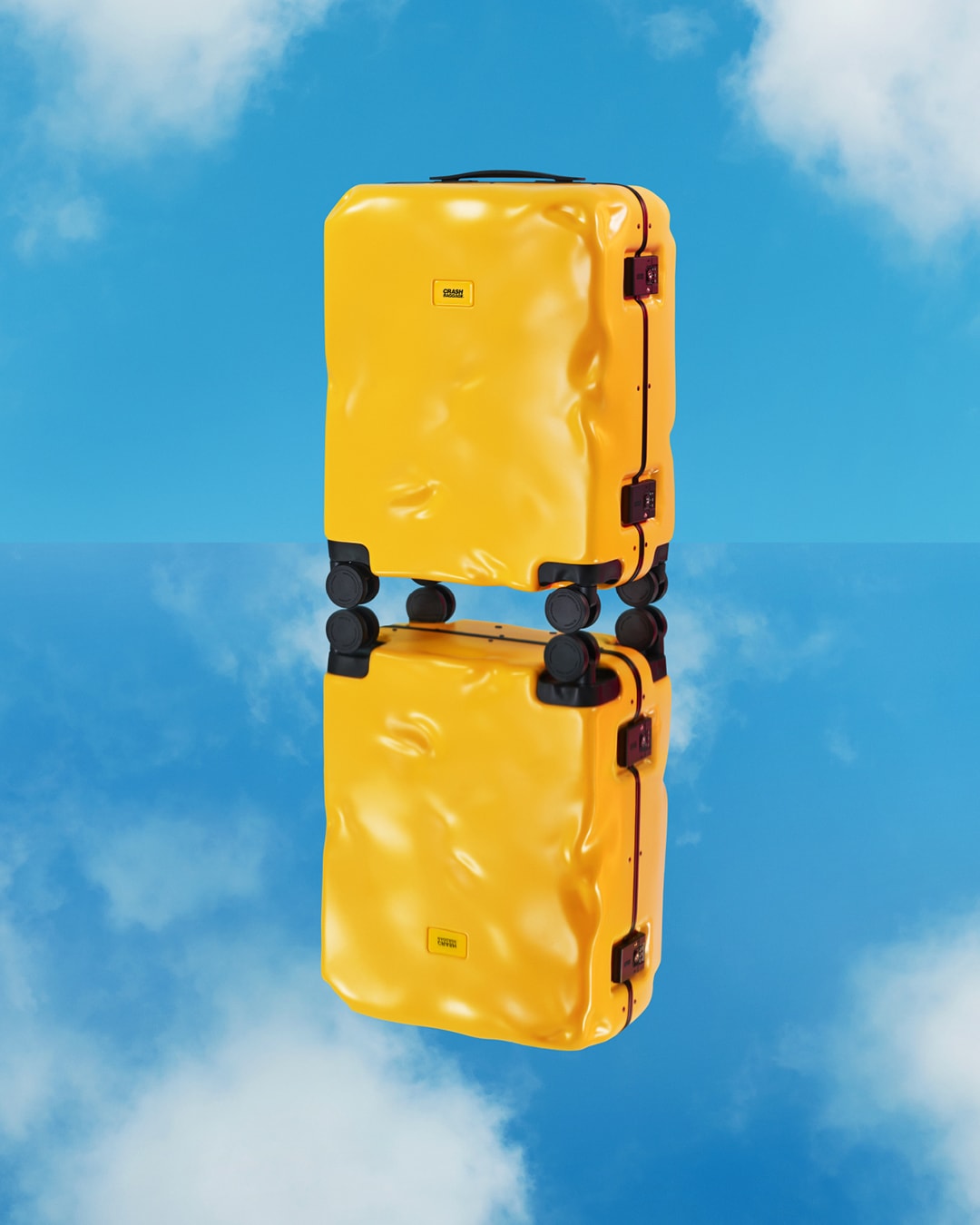
With Crash Baggage we built a content strategy that turns a dented suitcase into the symbol of an attitude, for those who let the unexpected leave its dents and live incredible stories worth telling.
Some products solve a problem. And then there are products that, much more rarely, manage to become symbols.
Crash Baggage starts from one of those insights that seem simple only after someone has had them: taking the thing everyone fears when traveling, a dent in a suitcase, and turning it into the brand’s most recognizable mark. It’s a very powerful idea because it doesn’t try to hide the accident. It puts it at the center. It doesn’t promise to protect you from the journey. It tells you almost the opposite: if you really travel, something happens. It’s the insight we look for in every branding project: finding what makes a brand different and giving it the sharpest possible form.
When our friends at Crash Baggage, the Venetian brand of carefully dented suitcases and accessories, contacted us to launch a new campaign, the goal was crystal clear: turning the brand into the icon of a carefree, nonsense attitude. Having an iconic product was no longer enough. It was time to take a step forward. To fill social media, the web, catalogues, e-commerce and online ads with crazy content, but above all to find a way for those dents to speak not just of a design, but of a way of being in the world.
The product we started from was already a story.
From the very beginning, Crash Baggage stood apart from its competitors by building its identity, design and naming from the point of view of its future customers and the idea of travel they share.
And that’s where we started too. From a very simple premise: whatever form the journey takes, we come back from every experience different from how we left. This is the symbolic heart of the product.
The dent, then, isn’t just an aesthetic quirk. It’s the visible trace of the fact that a journey, if it really is one, changes us. It becomes the symbol of those who travel without being afraid of picking up a few scars. This is where the product stops being just a product. A dented suitcase becomes a statement of character. And once you’ve understood this, the campaign can’t just show features, materials or design. It has to find a way to make that attitude visible. It’s the shift we also describe in our work with startups: the product alone isn’t enough, it needs a world of its own.
The Crash Attitude: when storytelling starts from the unexpected.
On one side there are the people who plan everything: trips, holidays, every moment of their day, because they’d like to avoid the unexpected like the plague. On the other there are those who sense that the craziest adventures are born precisely from the unexpected. This is where the crash attitude comes from: the willingness to lose the plan, to lose track of what you had scheduled, and follow your instinct into stories that, perhaps, make no sense at all. But that are worth living for that very reason.
To explain this attitude we also leaned on a small constellation of memorable crashes: the White Rabbit bursting into Alice’s afternoon, Neal Cassady crashing into Jack Kerouac’s routine, Don Quixote letting chivalric romances crash into him, Bill Evans and Coltrane recording the first album of pieces never written and never rehearsed, the flame that crashed into Coco Chanel’s hair, Dr. Gonzo dragging Raoul Duke into Fear and Loathing in Las Vegas.
They’re episodes worlds apart, but they all say the same thing: when something crashes into the linearity of reality, the story begins.
And this is the decisive strategic move. Because it lets Crash Baggage stop talking about travel only as a matter of logistics and start talking about it as an existential and narrative territory. The brand no longer speaks only to those buying a suitcase. It speaks to those who love the idea of leaving without really knowing what will happen.
The Crash Stories: from product to a complete world on social media.
From this attitude came the Crash Stories, the subjects of the Have a nice trip campaign. Instead of presenting the brand in a corporate way, the campaign invents a small universe of absurd stories, bordering on the surreal, populated by characters who follow the broken compass of their own instinct and end up in situations that are memorably stupid to tell. It’s the same creative approach that guides our work on advertising campaigns: finding the right idea that turns a product into a world.
They’re the stories of those who let the unexpected leave its dents. And who, for that very reason, live incredible journeys worth remembering.
This is exactly where the beauty of the project lies. The Crash Stories aren’t a creative format, but the way the brand makes its philosophy tellable. A dented suitcase, on its own, can be iconic. But to become the symbol of an attitude it needs characters, scenes, anecdotes, tone of voice, detours. It needs a world where the unexpected is no longer a malfunction, but a promise.
That’s why we wished them all: Have a nice trip. A tagline that seems very simple, but completely changes meaning. It doesn’t just mean “have a good journey” in the most conventional sense. It almost means: go, get up to your usual tricks, let yourself be swept away. It’s a wish that’s light only on the surface: in reality it says exactly what lies at the heart of the strategy.
An art direction that forces you to ask: what the hell happened?
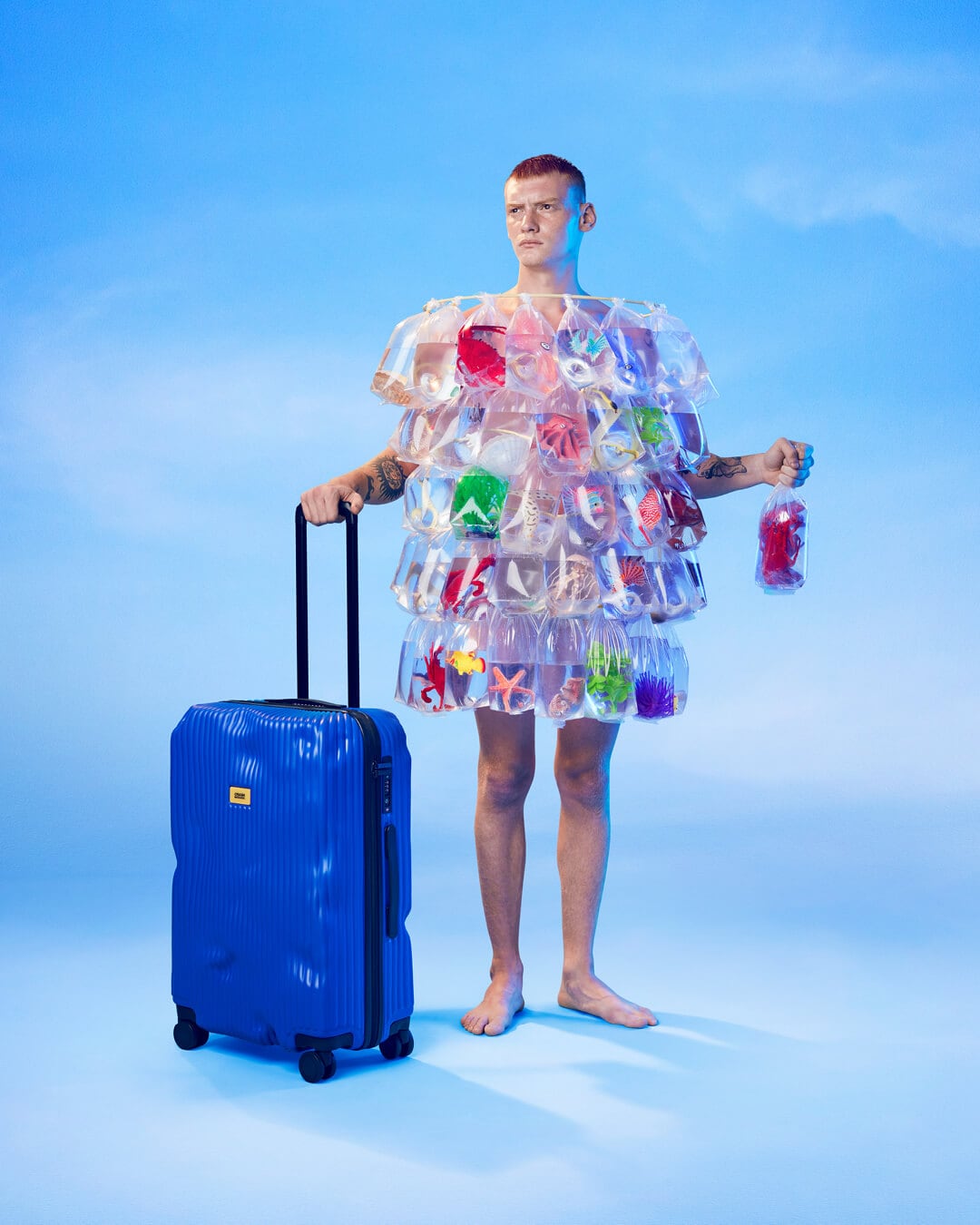
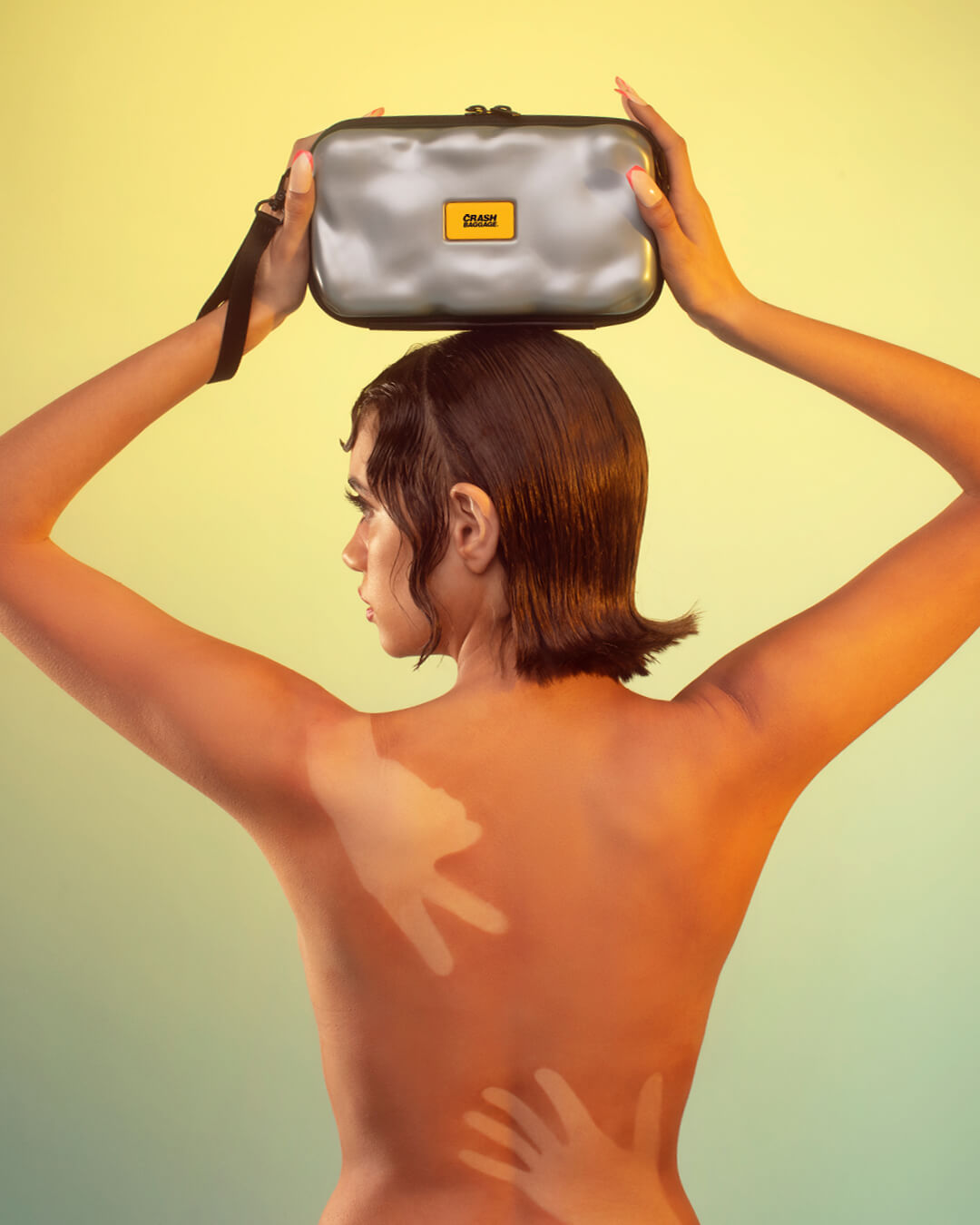
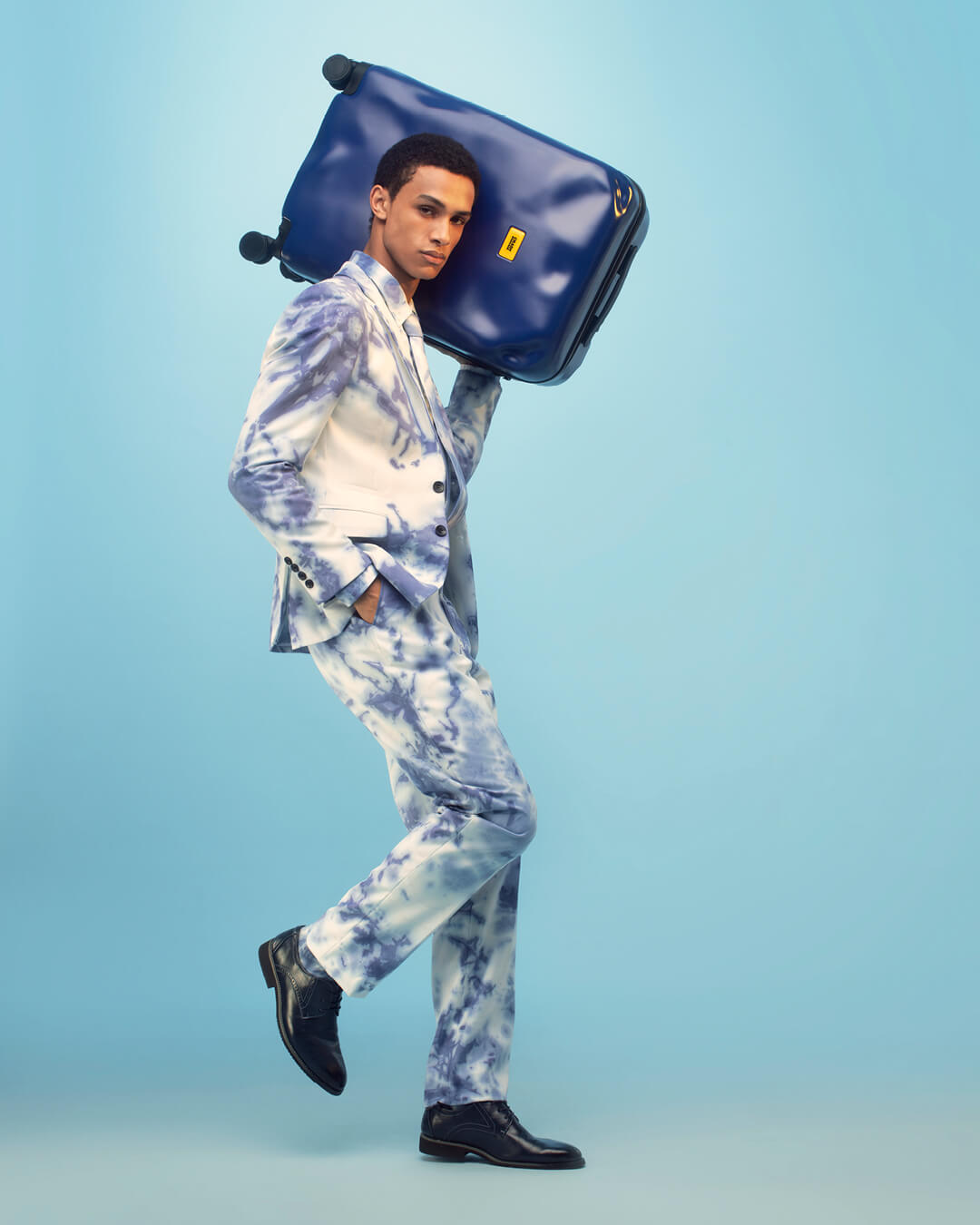
If the strategy defines the Crash world, the art direction is where that world takes shape. The Crash Stories are told through visuals bordering on the surreal, each built to force the viewer to ask: what the hell happened?
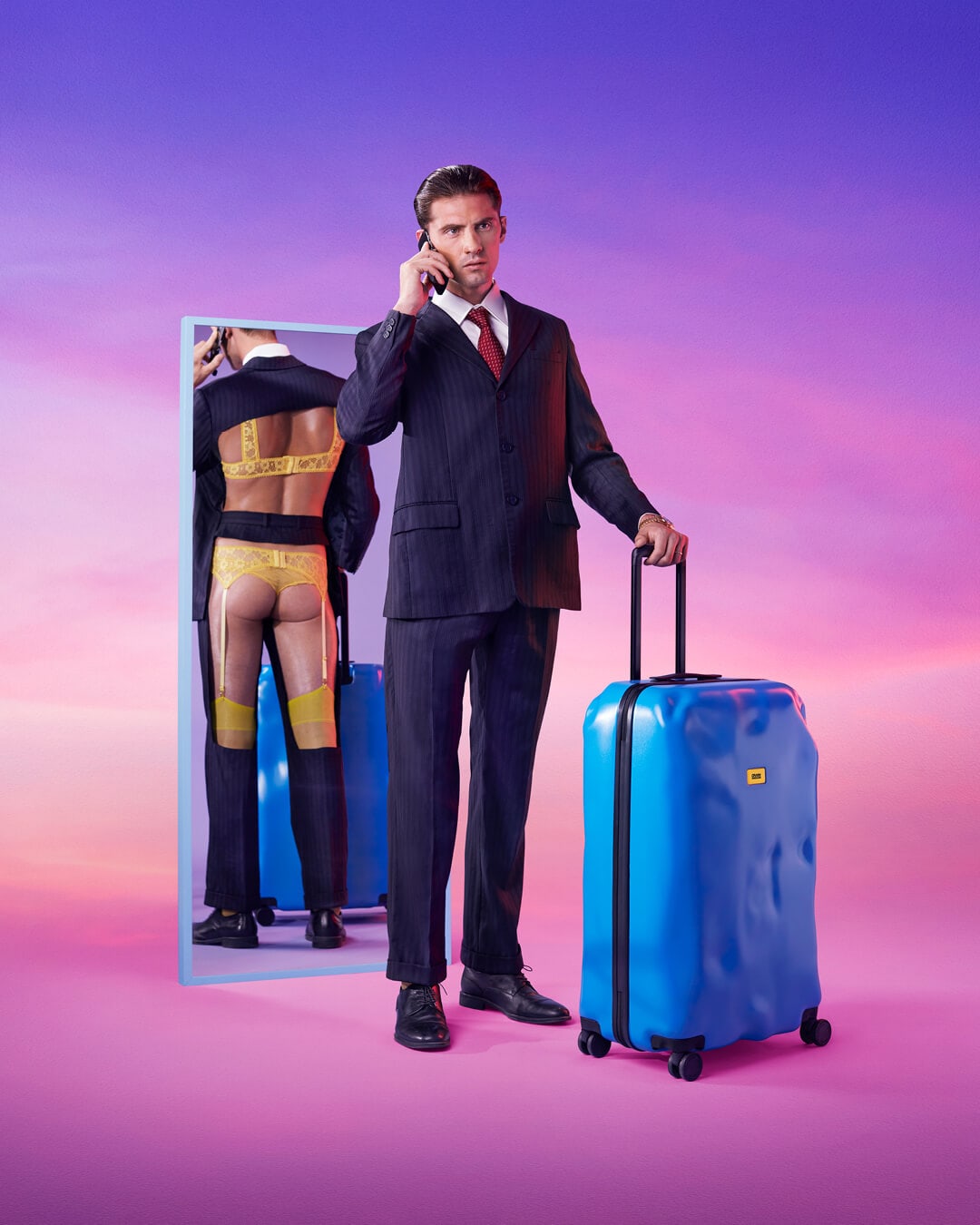
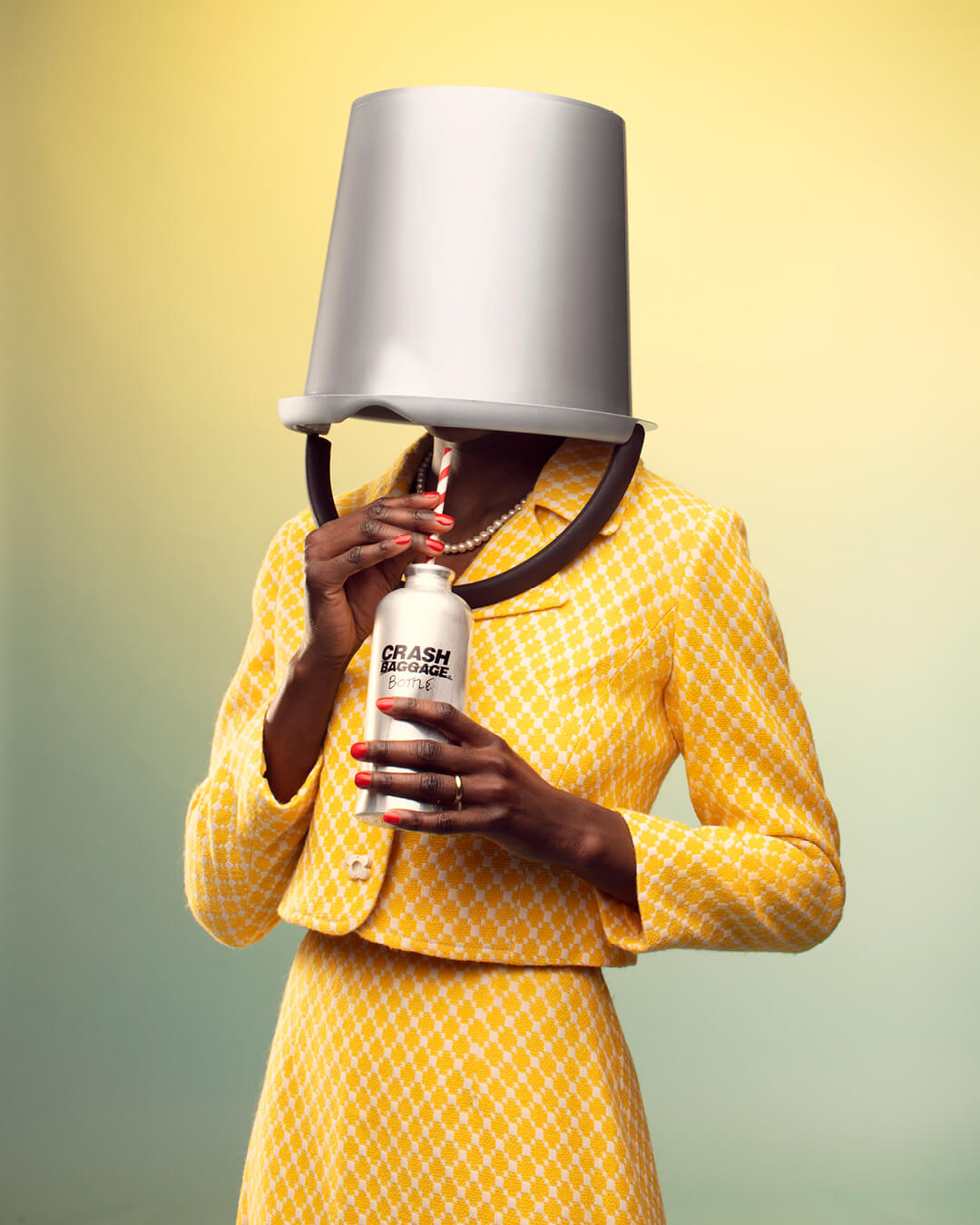
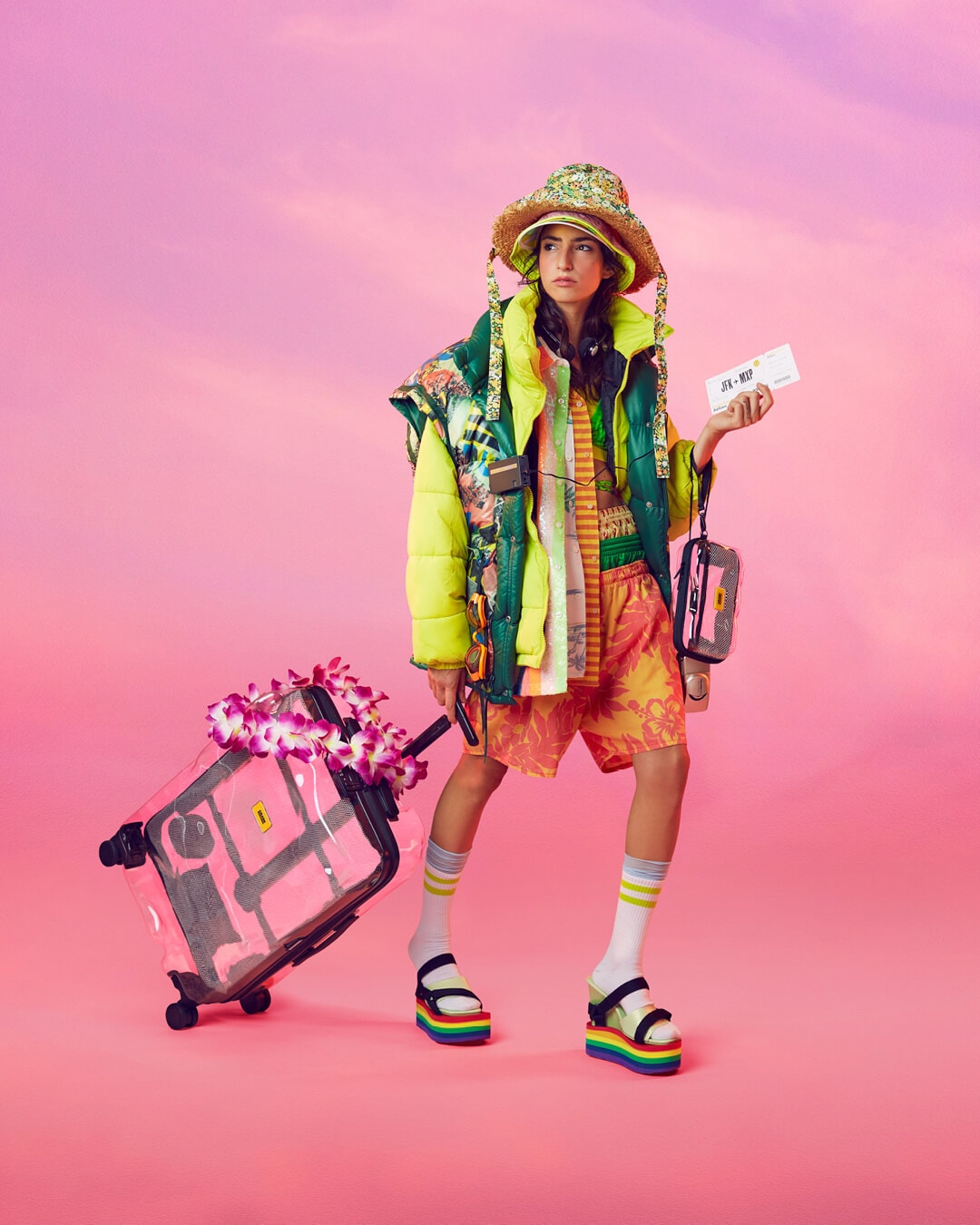
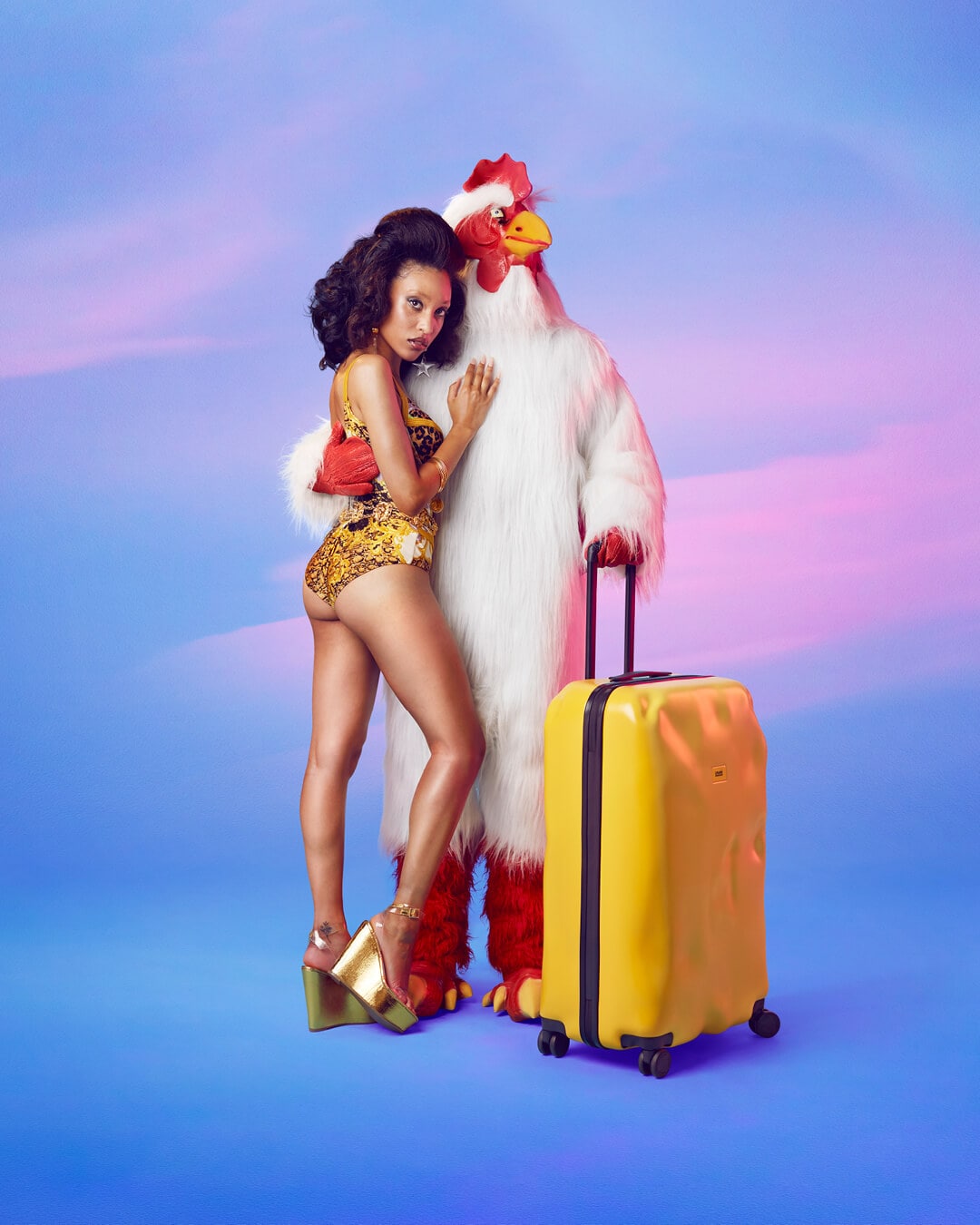
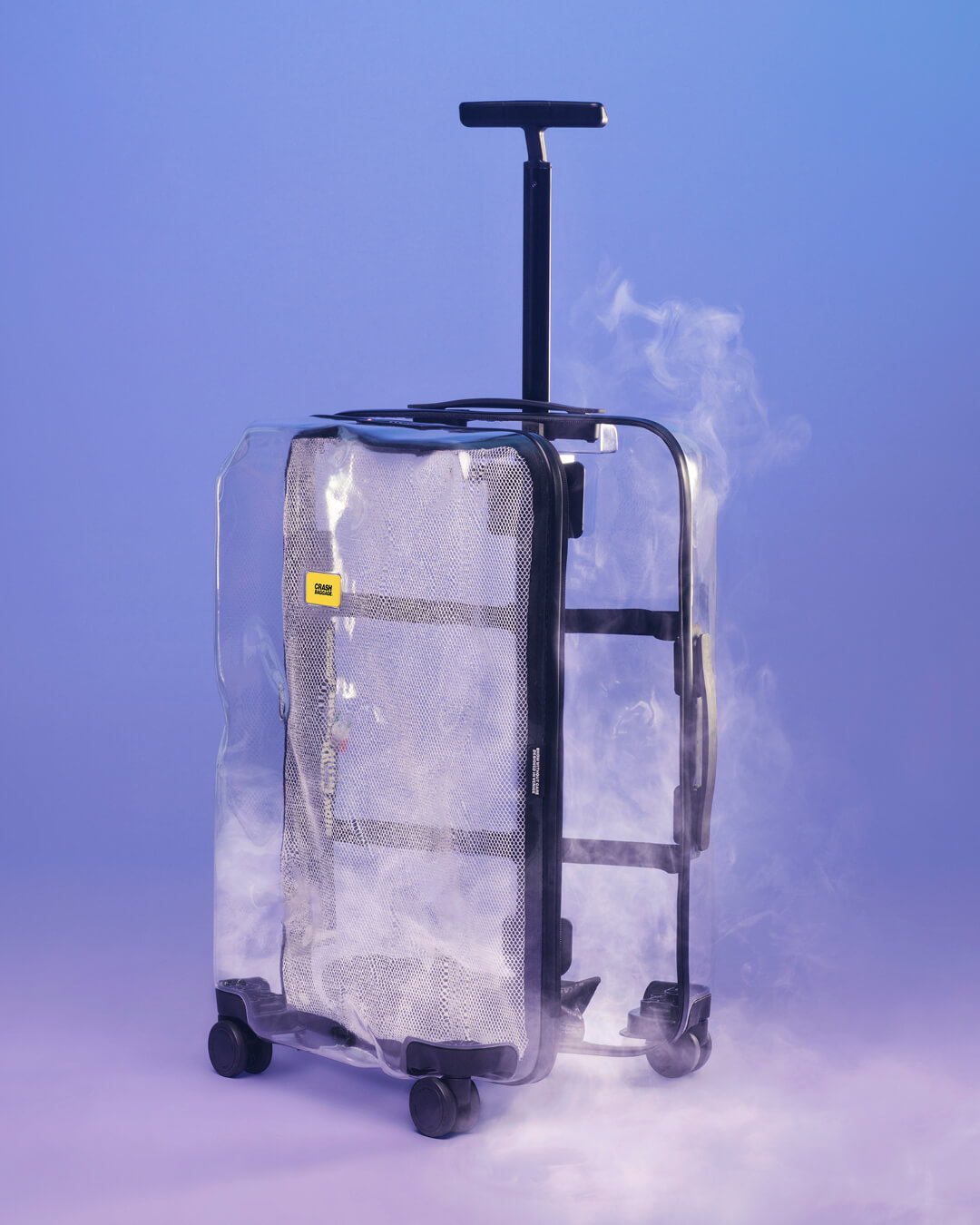
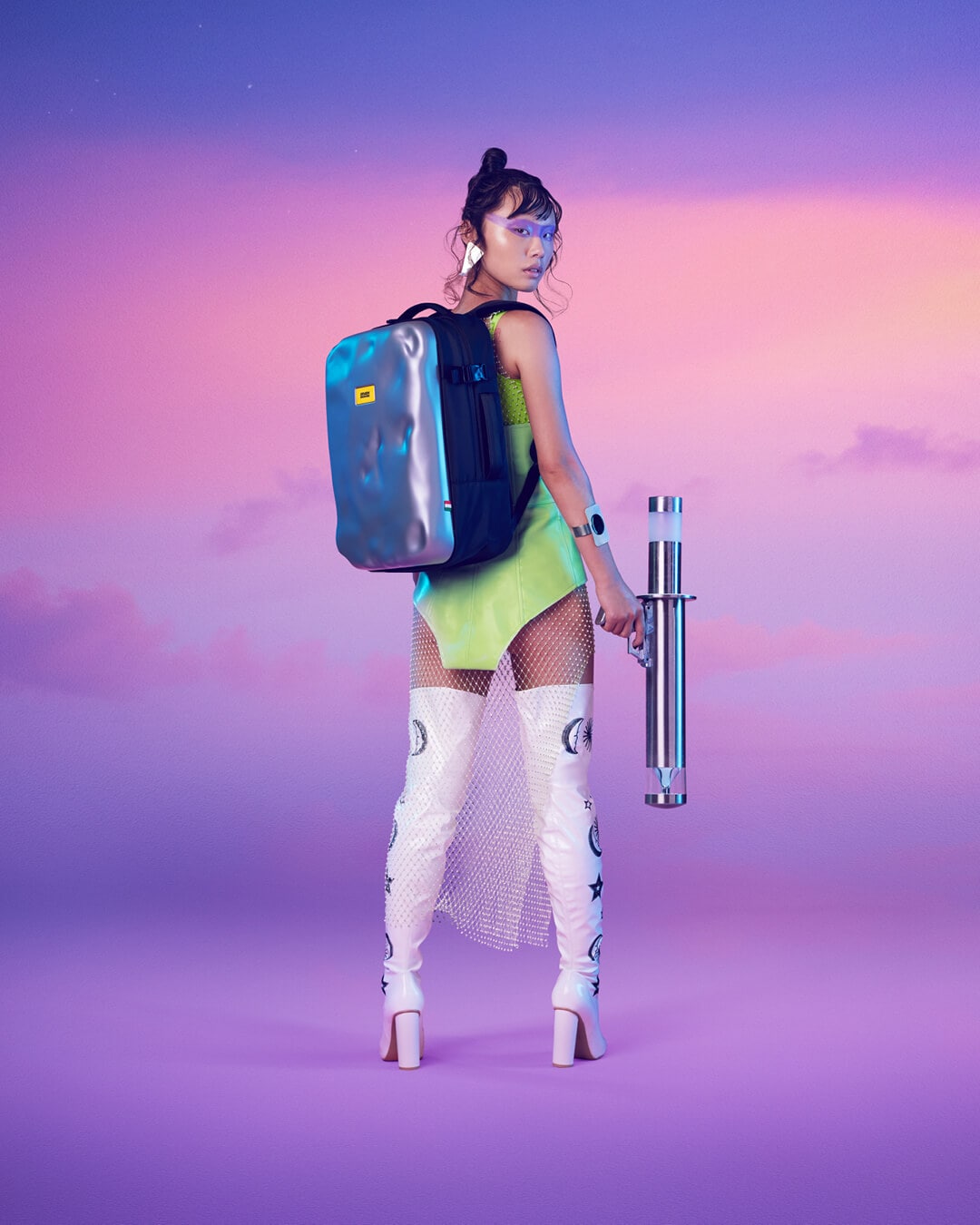
The scenes move in an undefined space, built with sky backdrops, very bright colors, extravagant styling and contrasting props. The photos were shot by our friends Mathery, the artistic duo we shared this madness with, and their sensibility was essential in bringing the project to exactly the right threshold: between fashion campaign, nonsense dream and perfectly orchestrated accident.
The images all have something memorably off about them. There’s a man in a suit and tie who looks impeccable on the phone, but whose reflection in the mirror reveals hidden hold-up stockings. There’s a woman in a swimsuit hugging a giant chicken as if it were the most natural encounter in the world. There’s a tourist dressed in a thousand layers, a boarding pass in her hand and a transparent suitcase with nothing inside. There’s a naked character wrapped in dozens of fish in plastic bags.
Everything seems to sit halfway between pop absurdity, fashion theatricality and dream logic. And it’s this threshold that makes the world memorable.
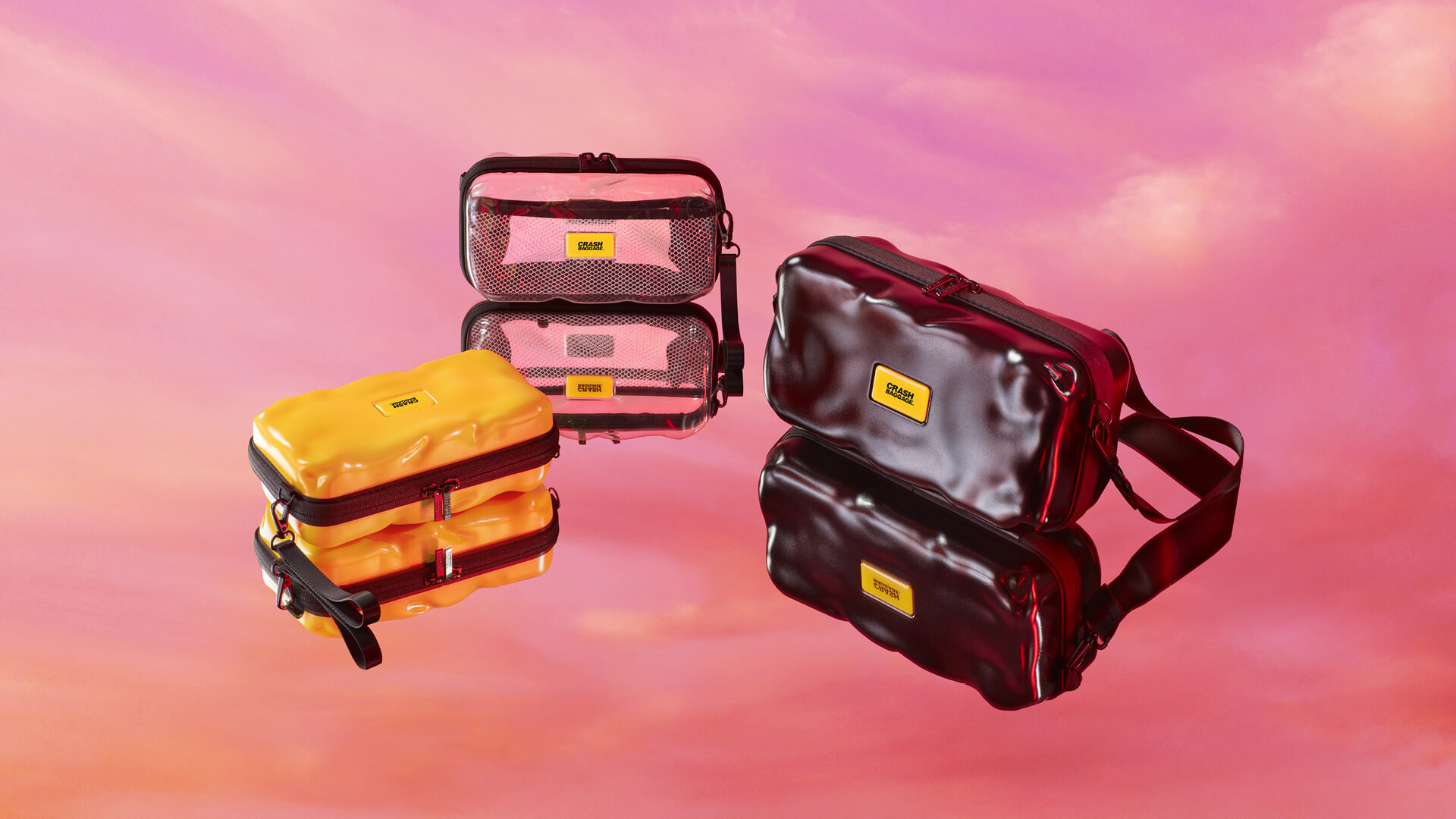
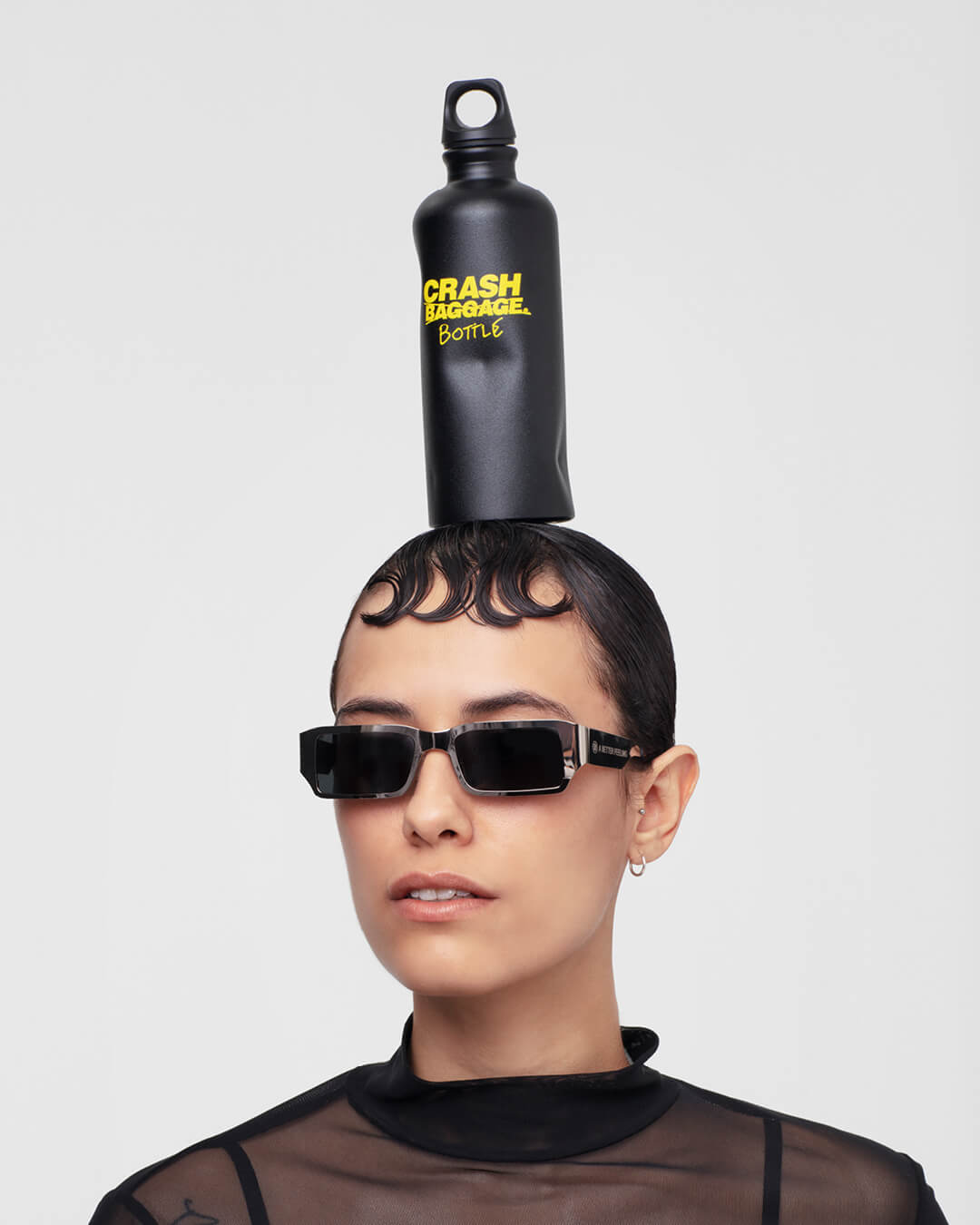
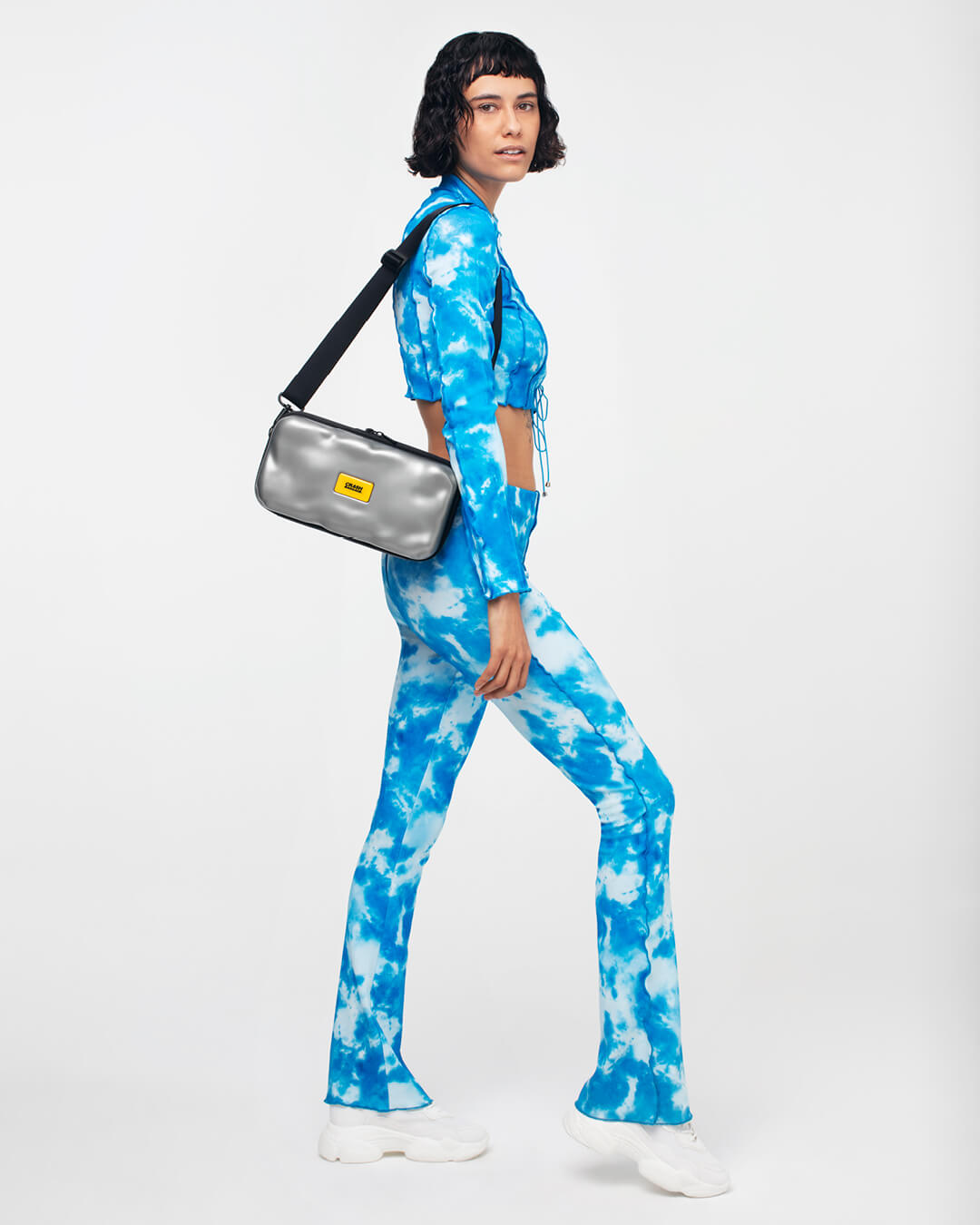
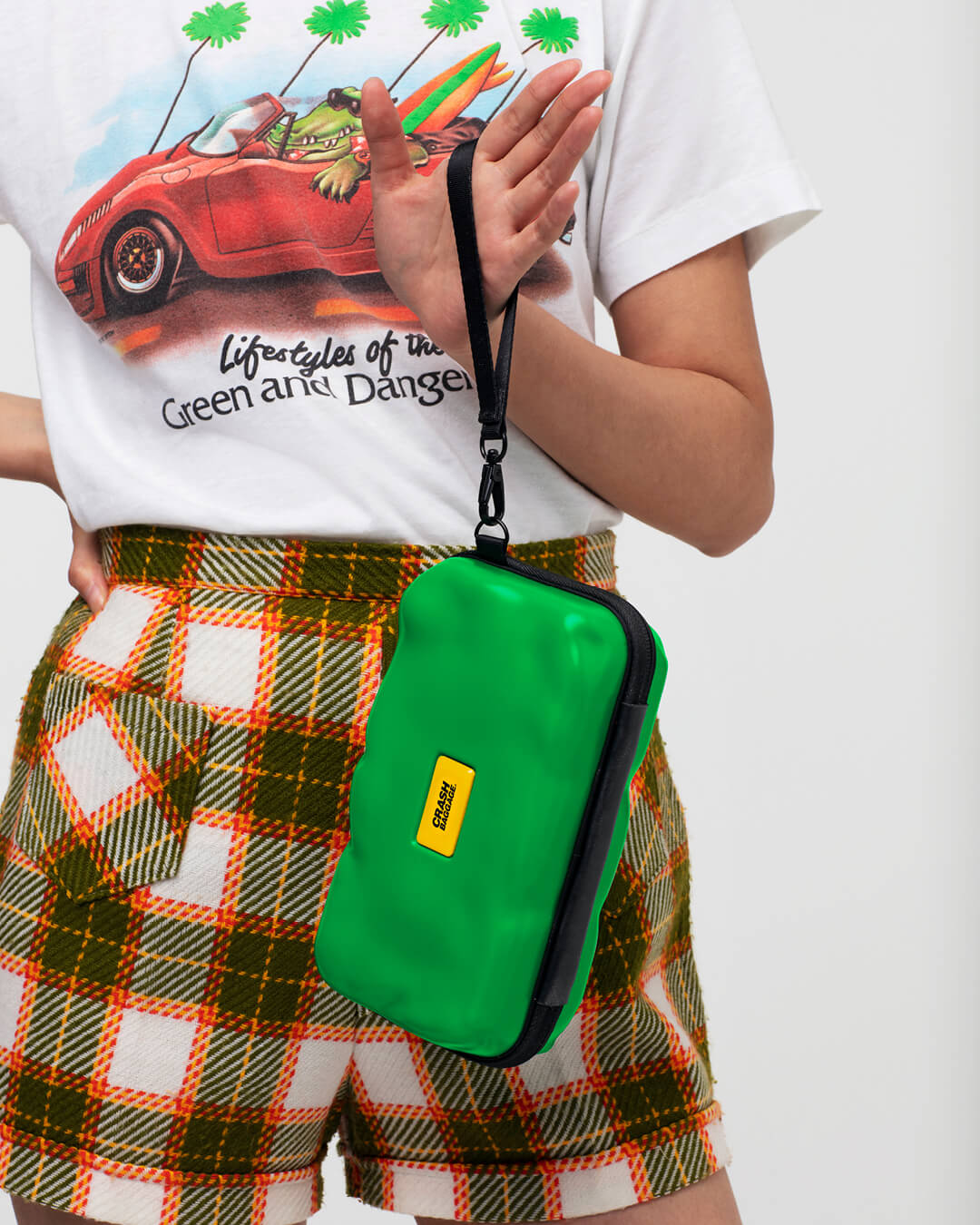
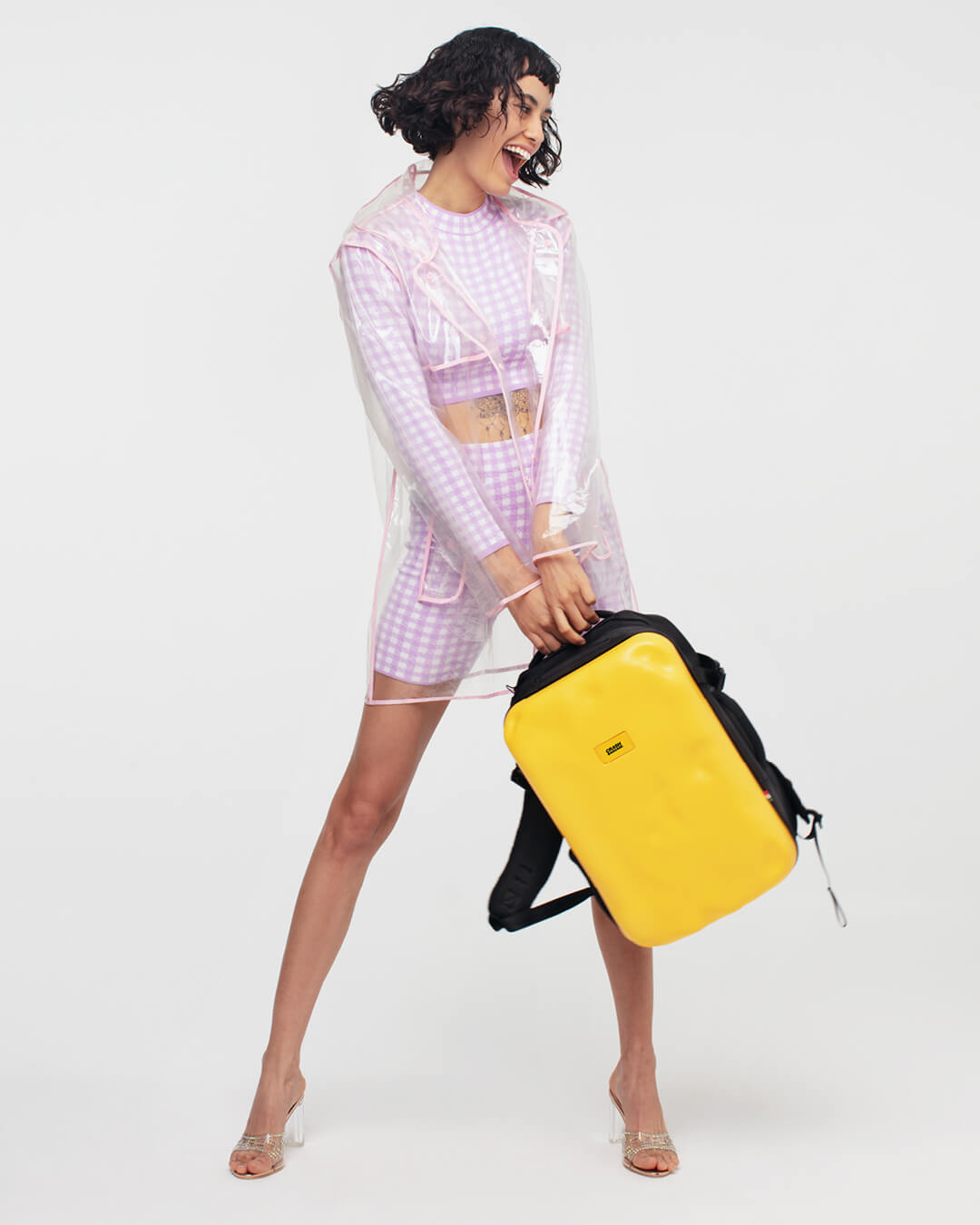
Even the product still lifes aren’t treated as simple product shots. They keep living within the same grammar. They interact with colored skies, props, mirrors and blocks, as if every suitcase, bottle or backpack had been left there to bear witness to the madness that had just happened during a Crash Story. It’s a very important choice, because it avoids the classic split between the campaign world and product content. Even the object keeps living inside the world.
Crash Baggage
Art Direction, Claim, Storytelling, Social Content
From campaign to editorial machine on social media.
The smartest part of the project, though, is that this world doesn’t stay confined to a launch campaign. It’s designed from the start as a content engine for social media, e-commerce, catalogues and ads. The goal was explicit: filling every brand touchpoint with crazy content. And this insight translates into a real social media content plan structured on four very clear pillars.
Crash Campaign refreshes the look and feel of the feed with all the subjects of Have a nice trip.
Crash Family puts suitcases, bags, backpacks and bottles at the center, presenting both their lines and dents and their more technical aspects.
Behind the Crash goes behind the scenes of the company, the brand’s history, the pop-up stores and the launches.
Crash Idols turns weird news and stories inspired by reality into new tales that reinforce the brand’s philosophy.
The system works because, if you want to turn a product into a symbol, a campaign isn’t enough: you have to build a machine that keeps producing world. The same attitude generates creative subjects, brand content, product posts, corporate storytelling and performance content.
After the Crash Stories, there’s no going back.
There’s an objection that, looking at Crash Baggage today, might come naturally. Namely: wouldn’t a brand like this, with a product like that, have ended up finding an ironic, colorful, nonsense tone anyway? Wasn’t it all already written inside those dents?
In our view, no. Or rather: not in this way, not with this strength, not with this precision.
Because even a very clever product doesn’t automatically generate a world. It can remain a nice design insight. It could have taken the road of minimalism, of the iconic but controlled object, of the cool, restrained tone. It could have become a design brand, with a cleaner and more predictable world.
The point is that it didn’t go that way. And it didn’t go that way because at a certain point Crash Baggage chose to push its attitude all the way, instead of taming it. The Crash Stories marked exactly this shift: they turned a good product idea into a sharp, ironic, memorable positioning. They moved the brand from what it sells to what it stands for. It’s the same leap made by Lunar: there too a technical product turned into a world through a brave creative choice.
And this is where the success of the work shows. Today Crash Baggage seems almost impossible to imagine in a different guise. It would be strange to see it presented in a more neutral tone, with a more rarefied world. This apparent inevitability is the campaign’s strongest result. It means that the brand can no longer be separated from its attitude.
Today Crash isn’t just a dented suitcase. It’s a way of looking at the unexpected. It’s a color, a rhythm, a controlled madness, a form of nonsense that has permanently taken its place inside its name. And this is what we wanted to achieve: not a successful campaign, but a living world, impossible to detach from the product that generated it.
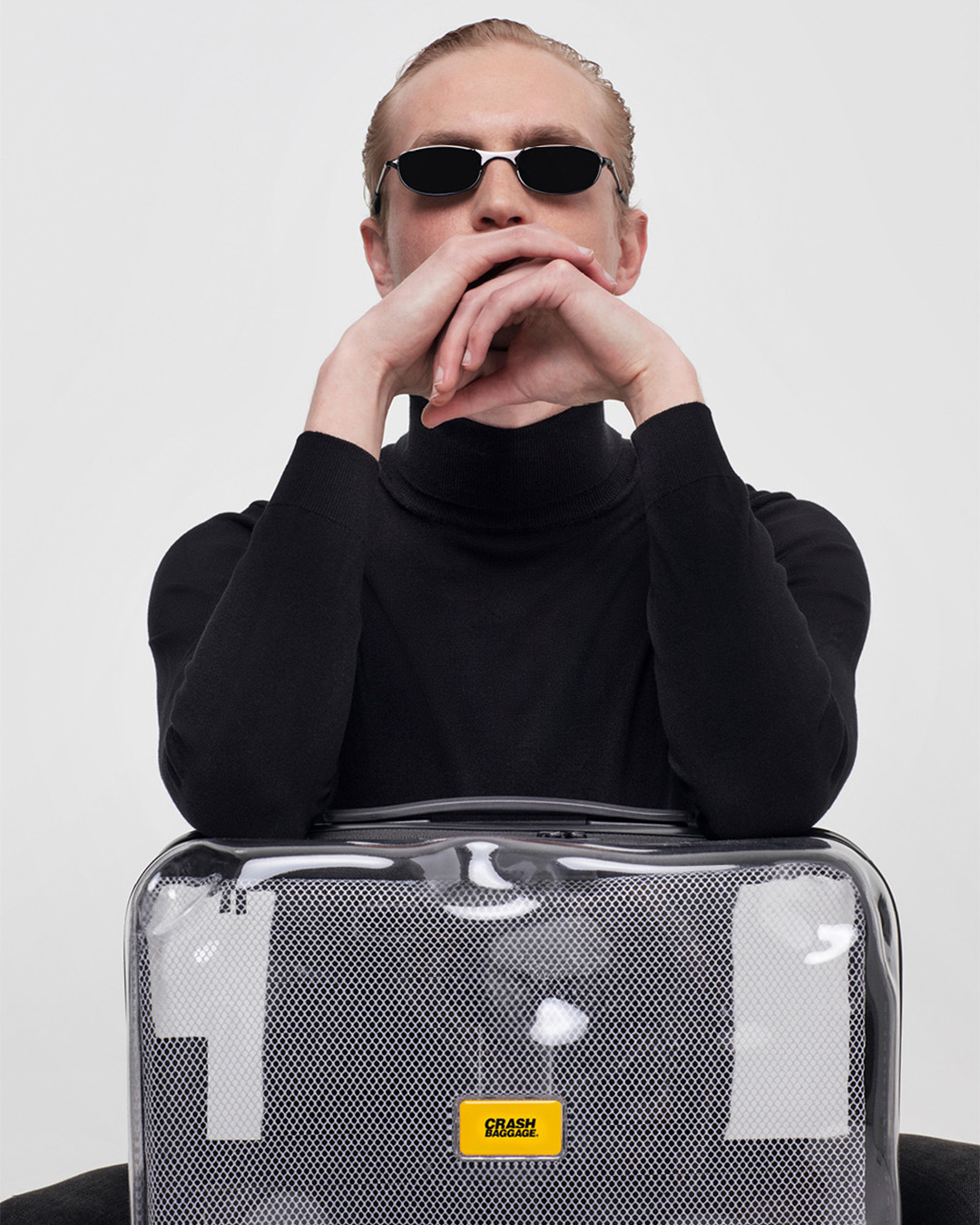
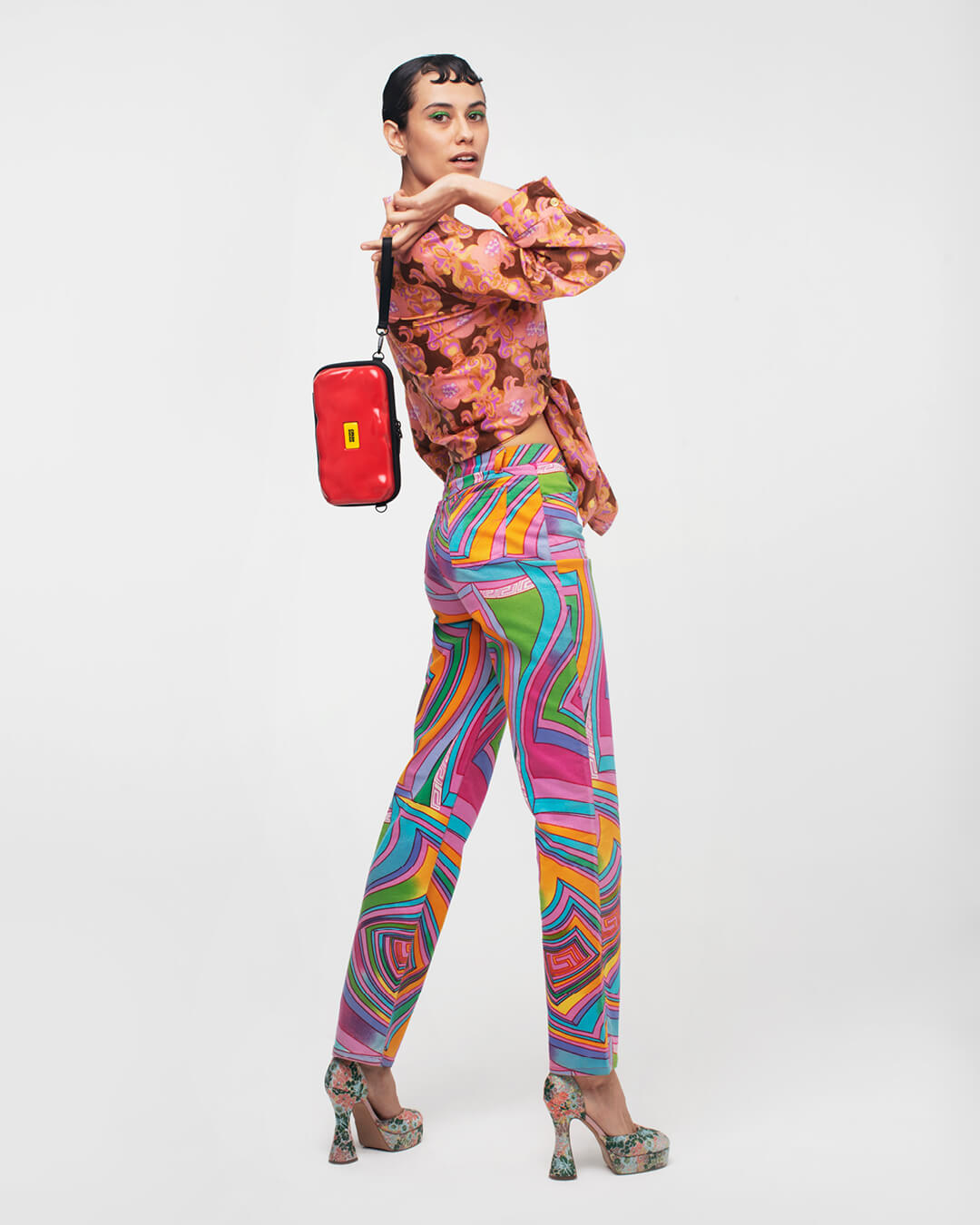
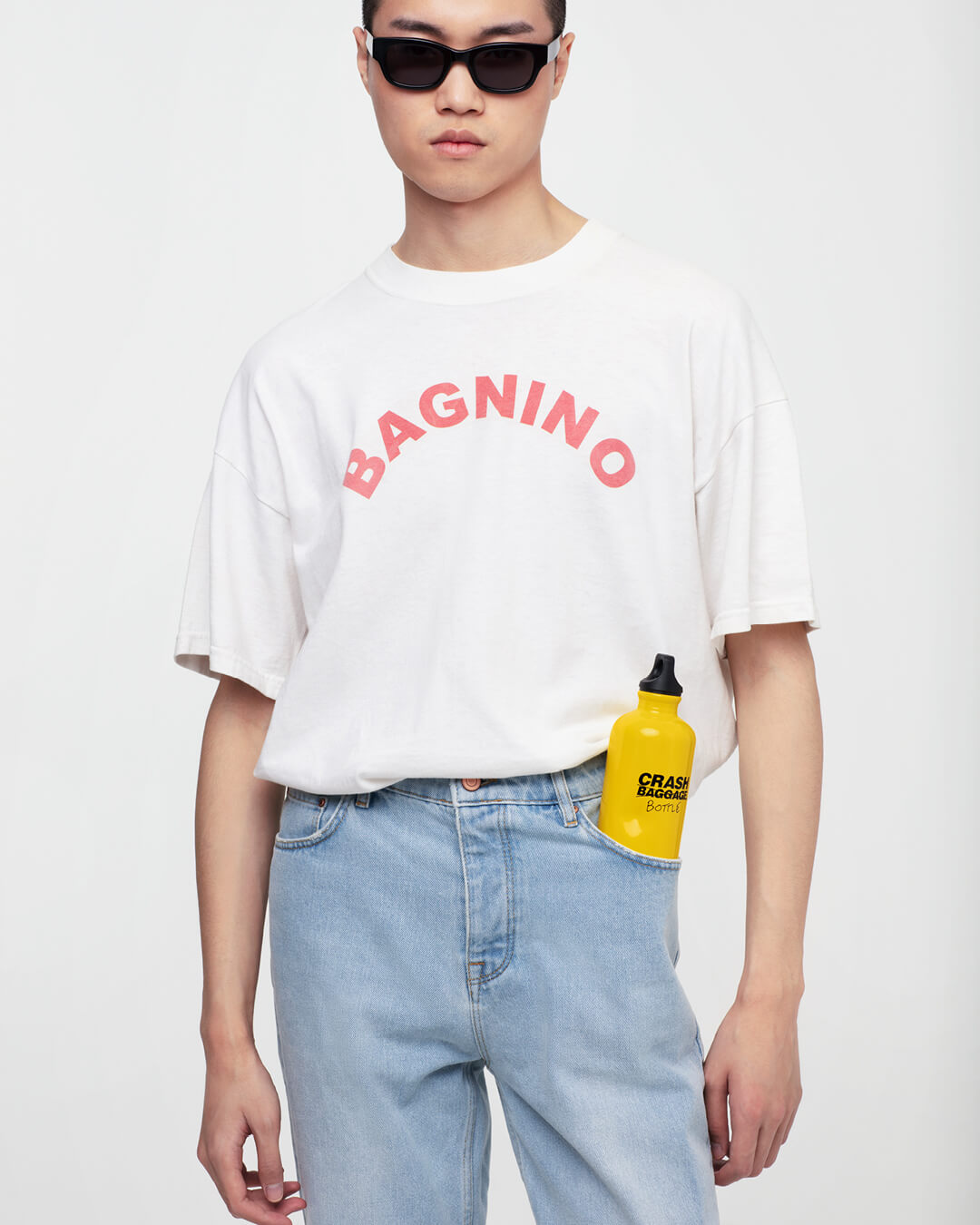
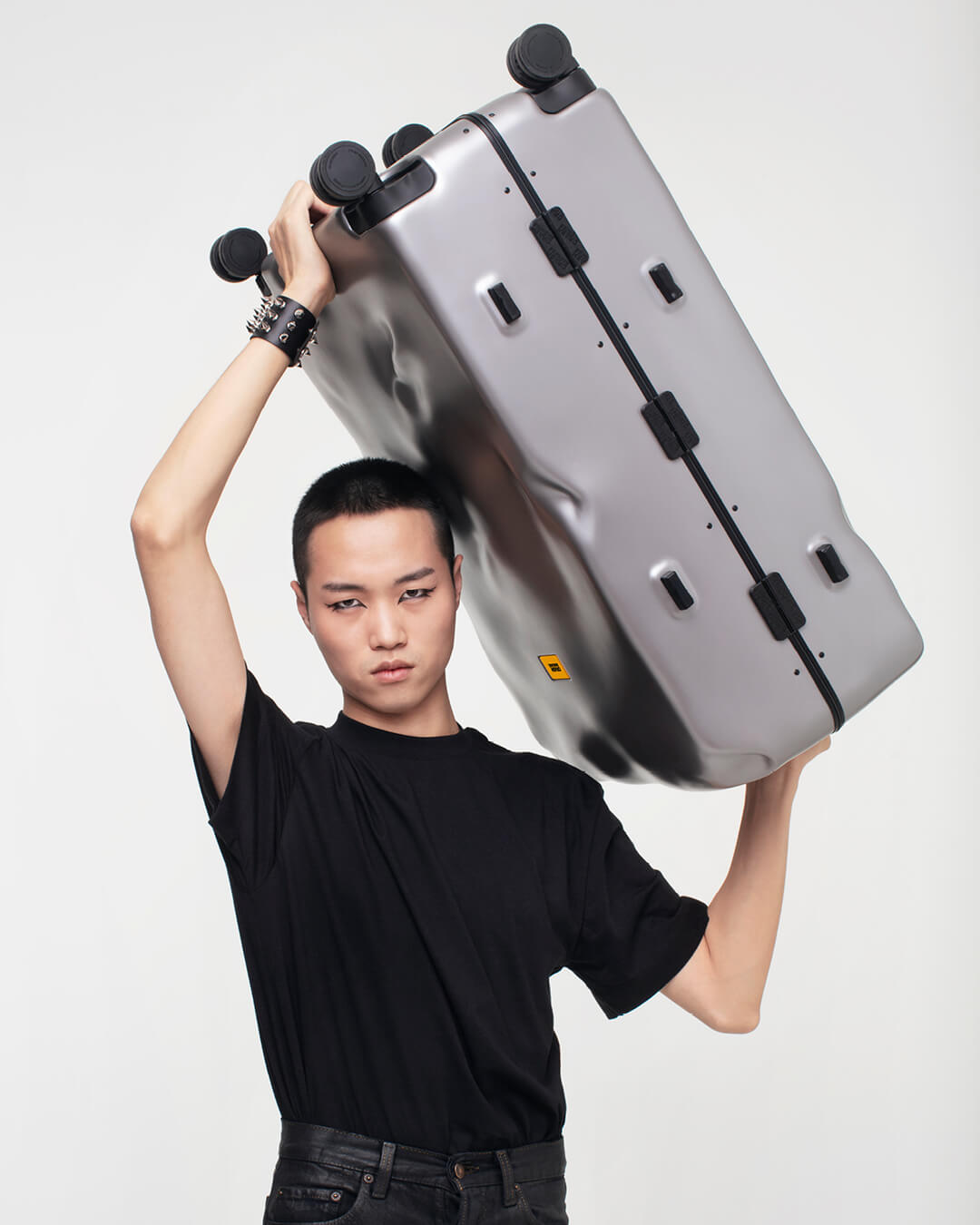
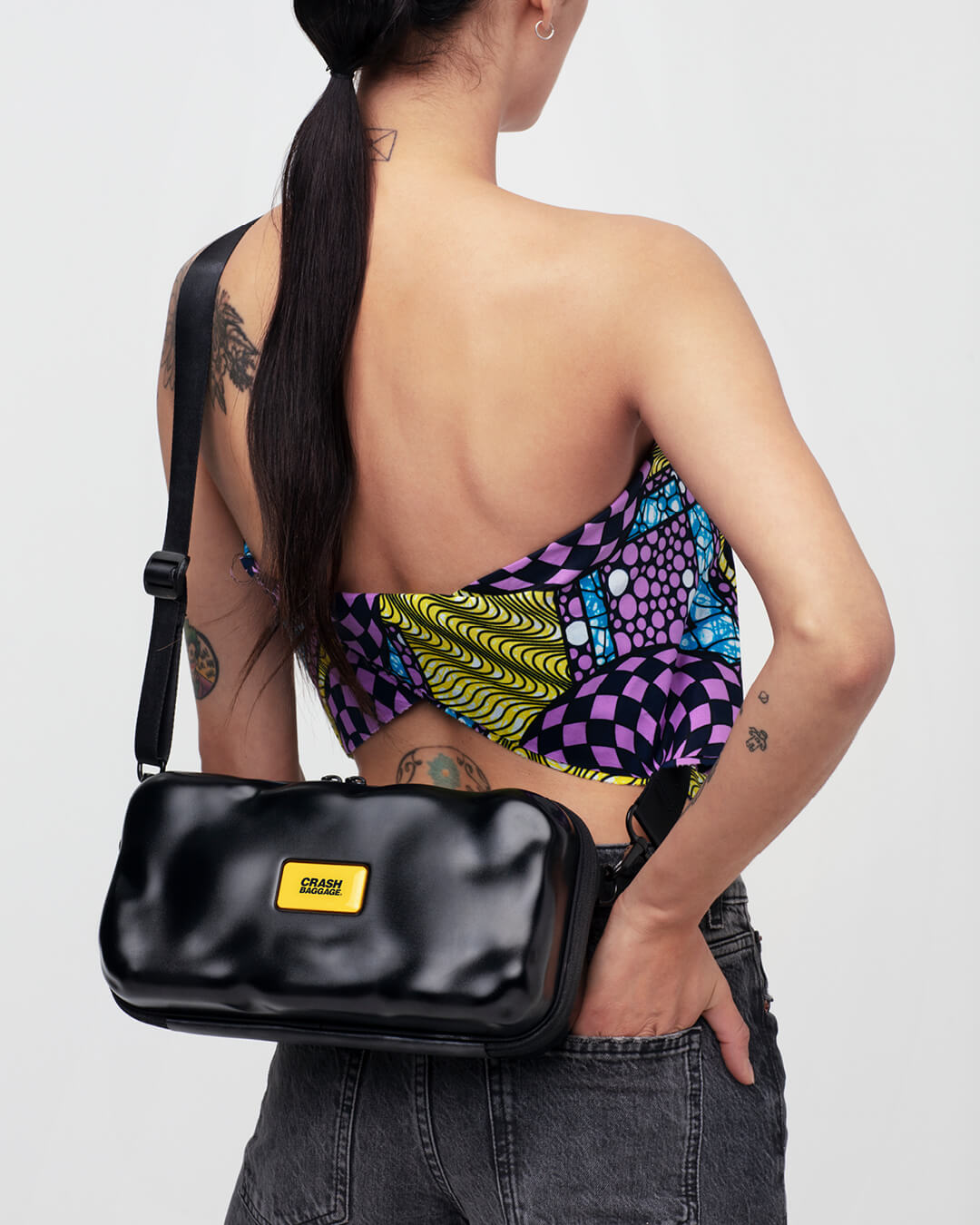
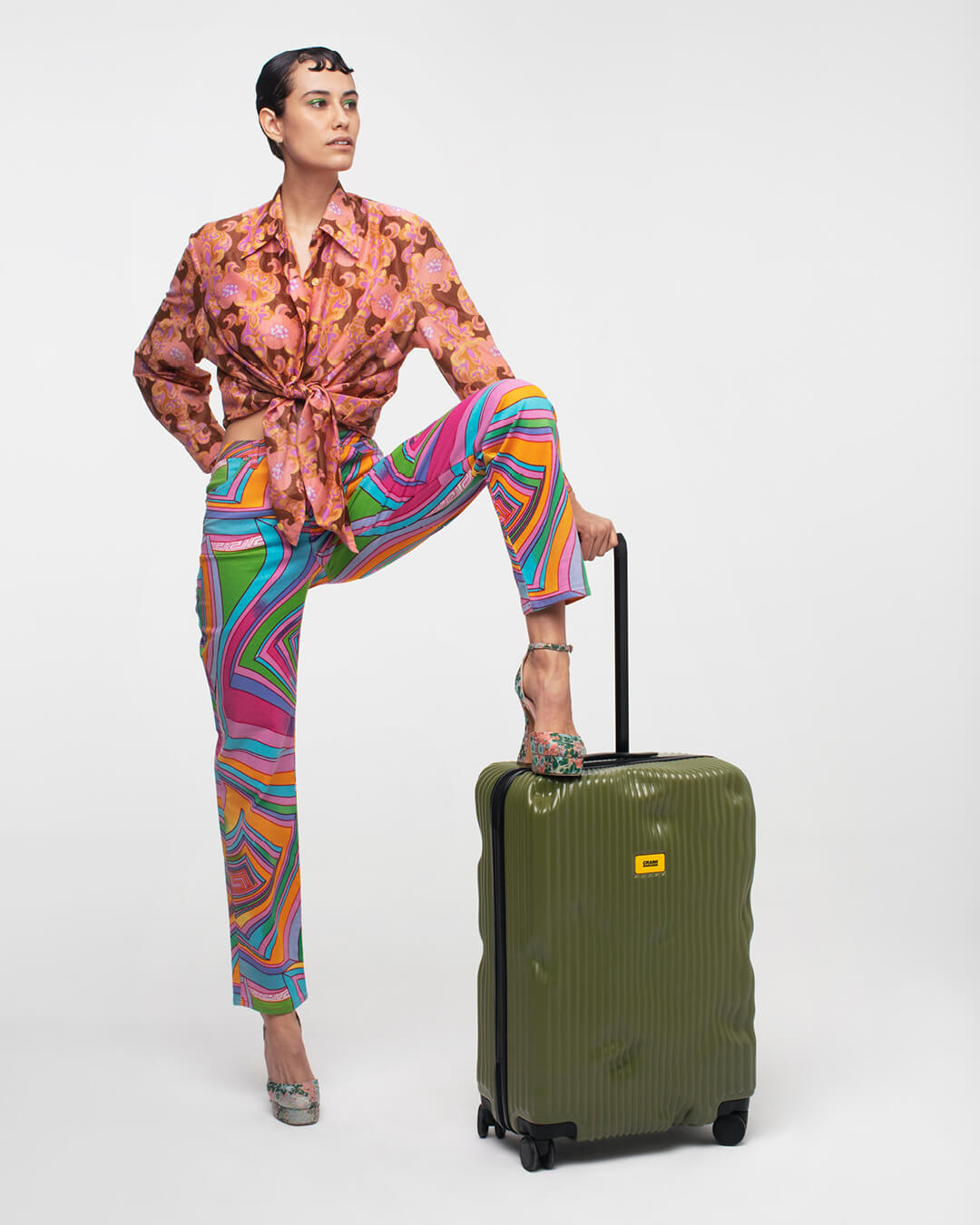
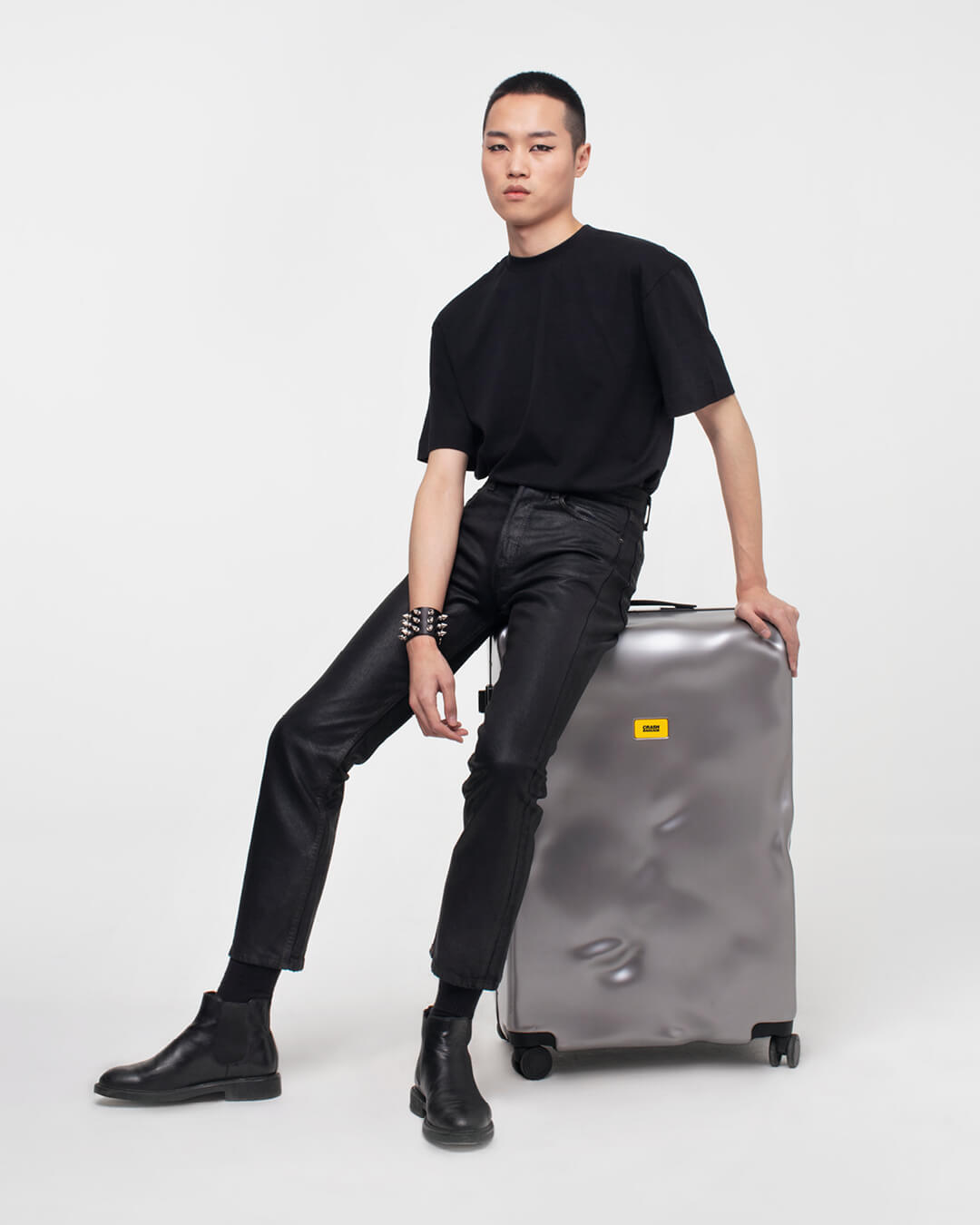
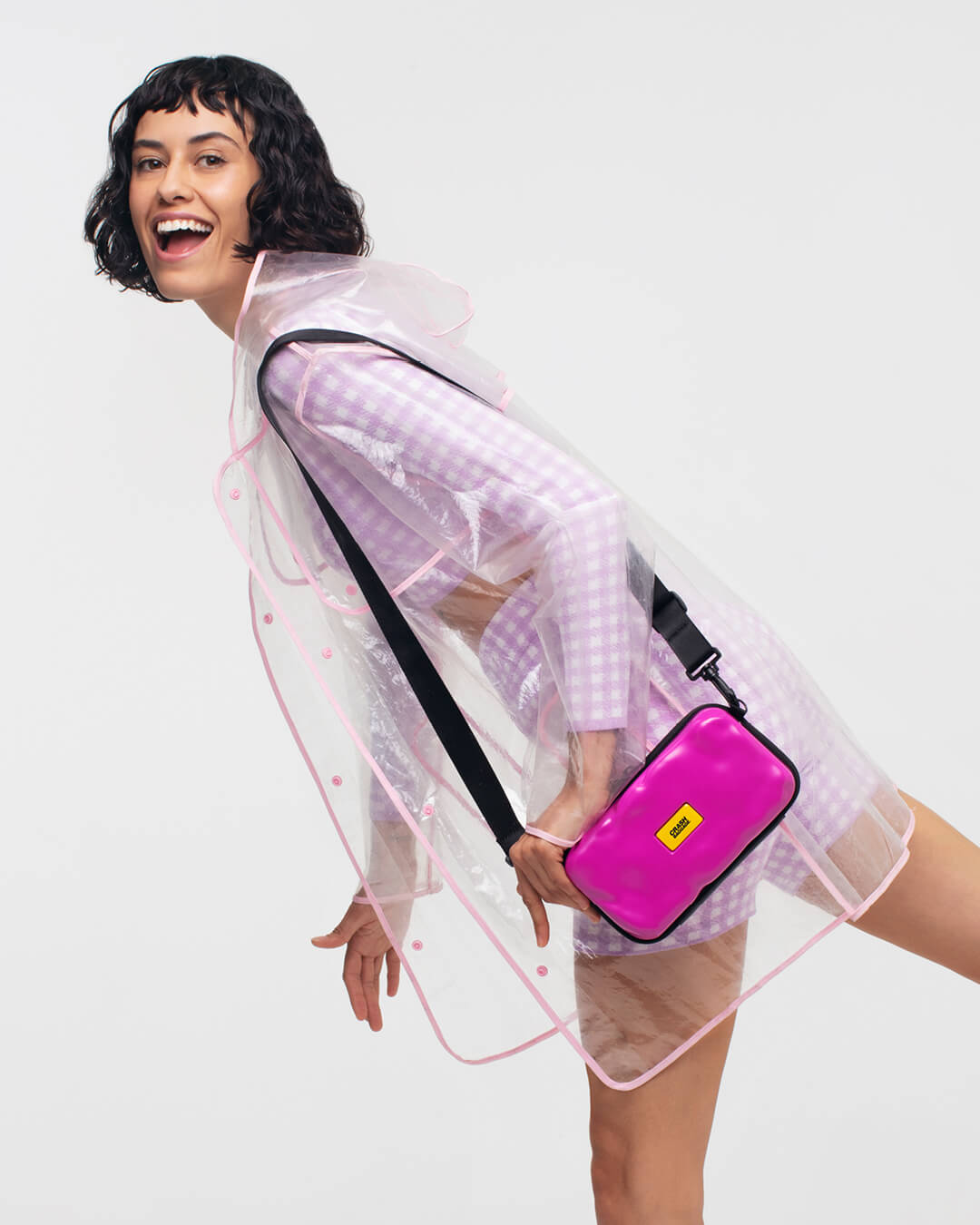
Crash Baggage: E-Commerce
Lookbook, Ecommerce, Print
In short, this is how we worked for Crash Baggage.
Crash Baggage is a Venetian brand of carefully dented suitcases and accessories. At YOHOHO we created the Have a nice trip campaign and the entire content strategy: a creative strategy founded on the Crash Attitude, the Crash Stories (surreal, nonsense subjects photographed with Mathery), the tagline “Have a nice trip”, a social media content plan on four pillars (Crash Campaign, Crash Family, Behind the Crash, Crash Idols), and art direction for catalogue, e-commerce and ads.
This project shows how a startup can turn a product feature into an iconic positioning, building a narrative world impossible to separate from the brand.
Dare to challenge us?
Tell us about your startup idea:
bebrave@yohoho.studio